
History
Bridging Bath Place and the High Street. The most intimate of the gardens, where the story of the 1844 railway is told as you walk: a timeline along the screen, old rails running through the planting and small clusters of trees to pause among.

1: Clusters of trees
2: Play on the way, with little adventures along the route
3: Railway tracks running through the planting
4: Heritage signs to point the way and tell the story
5: A long screen telling the viaduct's story as a timeline
6: A gateway to mark the entrance
7: The main route through the garden
Walking through the story
The History Garden draws on the railway too, but in a quieter, more reflective way: this is the most intimate of the gardens. Its job is to reveal the layers of history embedded in the viaduct, and we want you to discover those stories as you move through the space, through interpretation, artworks and wayfinding woven into the planting, rather than meet them all on a single plaque.
Along the railway edge runs a continuous screen. It gives a degree of separation from the live line, and it doubles as a timeline of the viaduct's past: as you walk its length, the history of the place unfolds around you, so that walking the garden feels like walking through time.
Between the screen and the parapet, informal clusters of trees make sheltered pockets for sitting and reflection along the way. Reclaimed railway tracks thread through the planting, subtle reminders of the line's heritage and chances for play and exploration, and a gateway at each end marks the garden's beginning and end.
Planting among the tracks
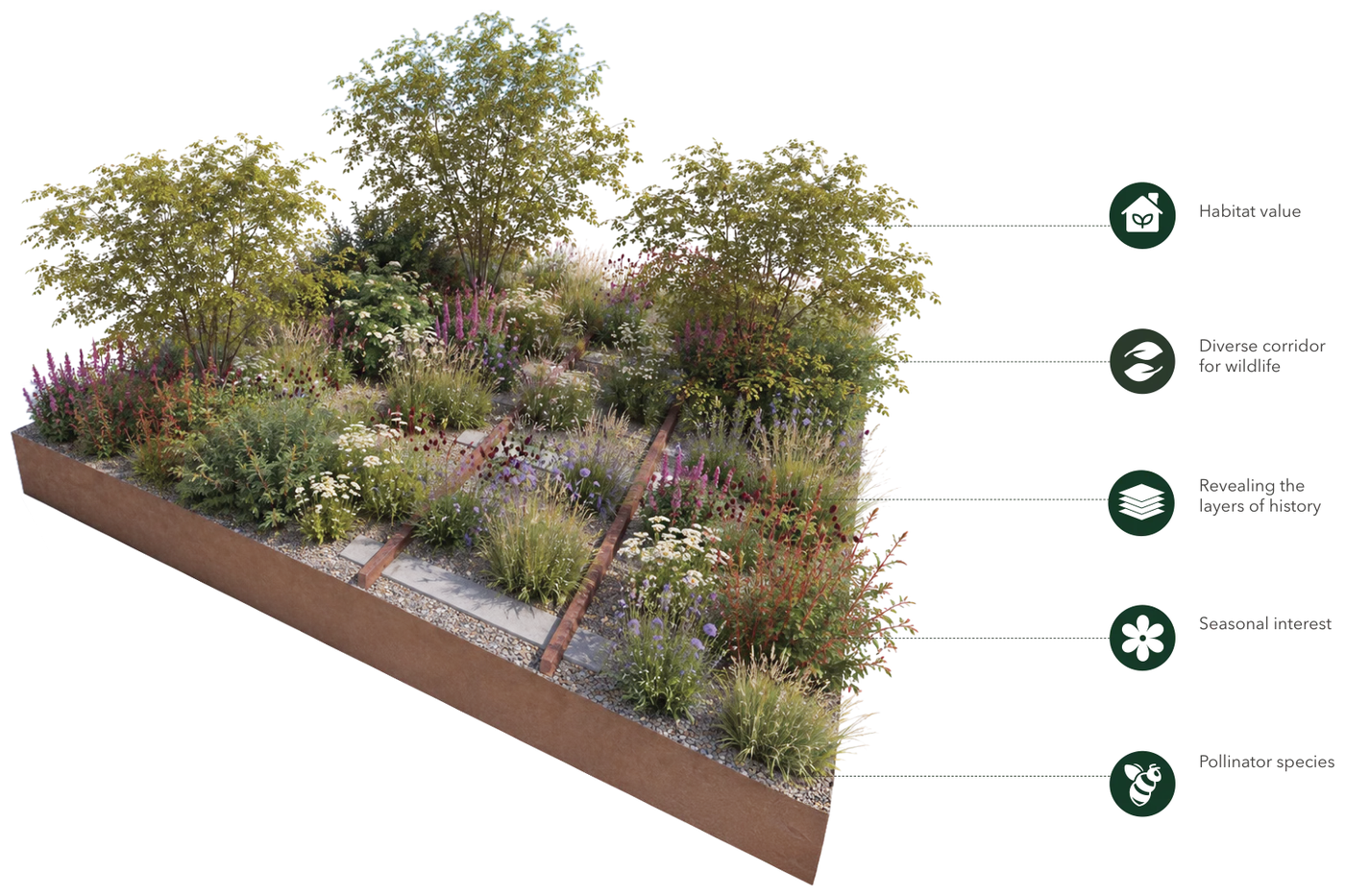
We want the planting here to feel natural and spontaneous, as if it had emerged between the old rails over time, while weathered steel gives it structure and a nod to the industrial character of the viaduct. The same bed works on several layers at once: habitat and shelter for wildlife, seasonal interest, flowers for pollinators, and the history of the railway still visible underneath.
Section
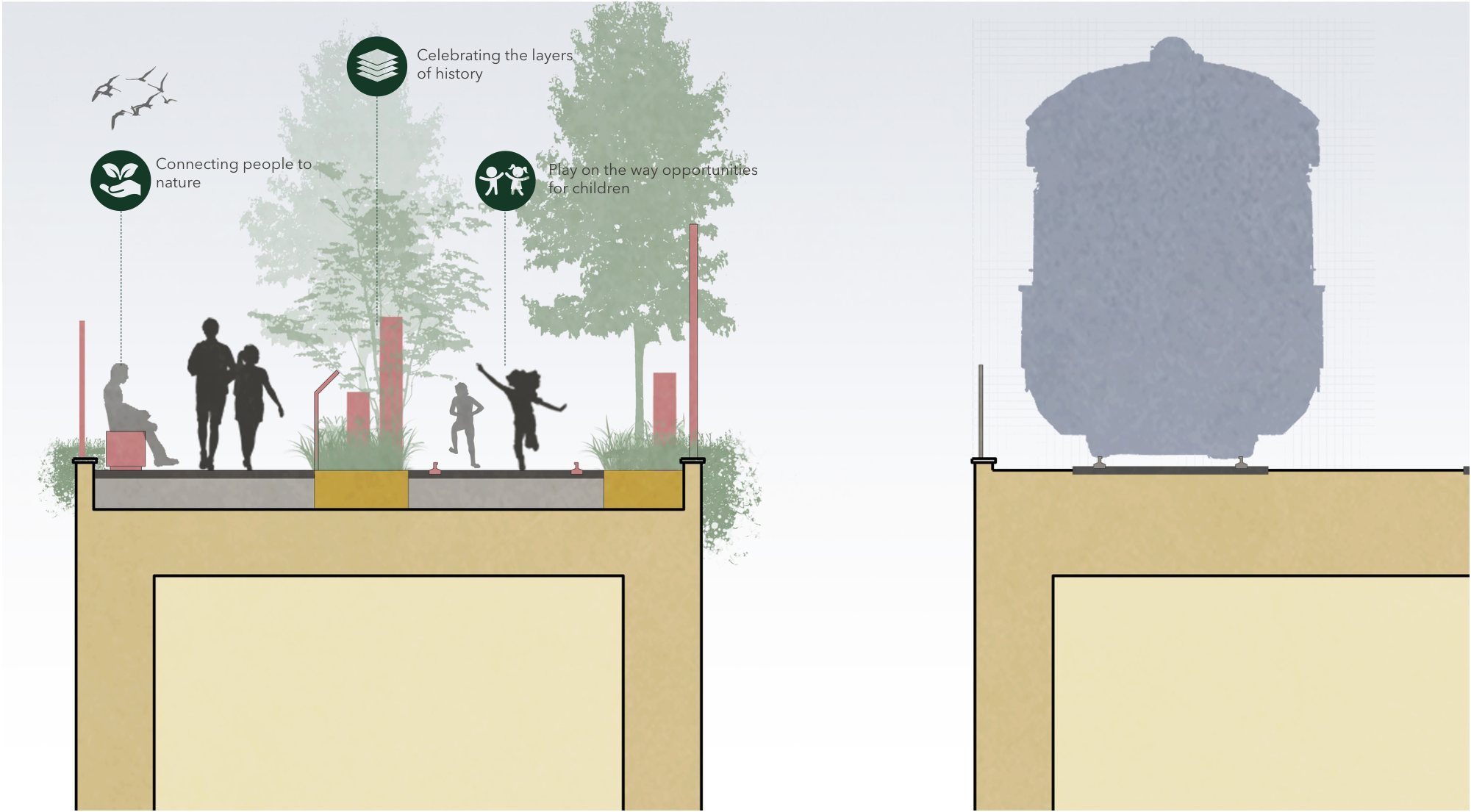
The section looks at one of the places where the path divides and how it feels to be inside that space: the main route through, the timeline screen at the edge, and the series of markers that guide the journey. Those markers take the form of upright timber sleepers or weathered steel, telling the story of the viaduct while giving the garden a look of its own. How we tell the history and find the way is still taking shape, and it is an exciting chance to work with the town on how these stories are shared.